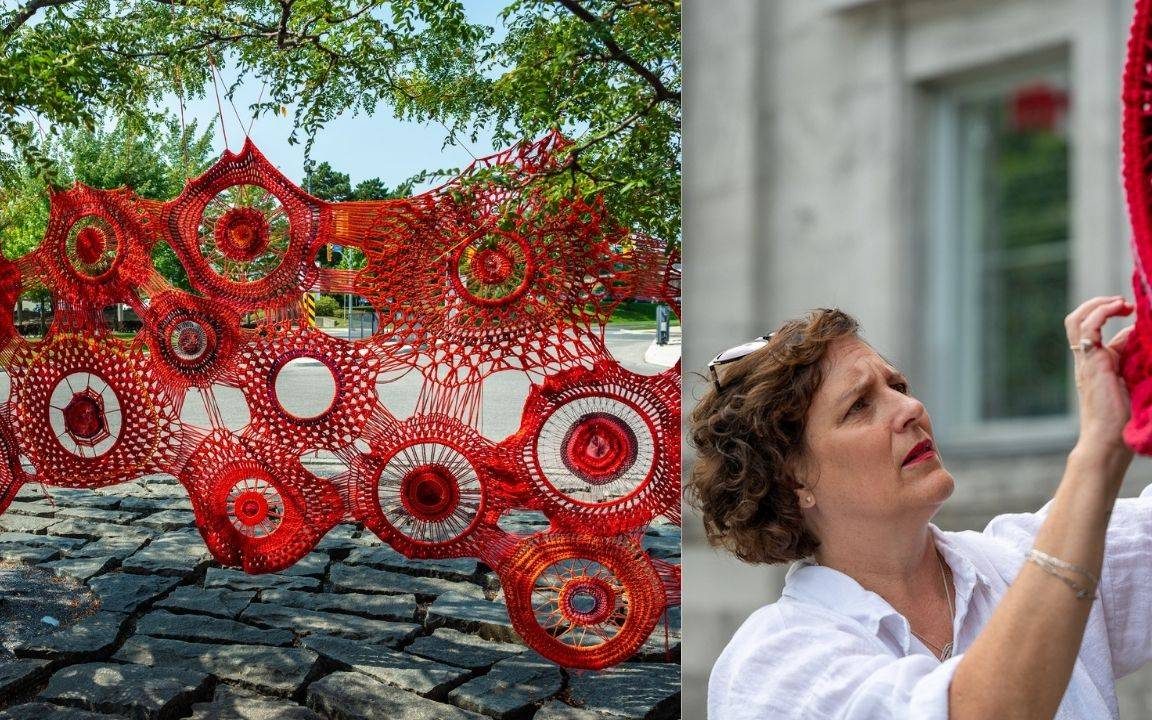
National Day for Truth and Reconciliation with Visual Artist Tracey‑Mae Chambers
Online School Program
Wednesday, September 24, 2025
11 am–2 pm
Livestream
Audience: Grades 6–12
Cost: Free for school groups (advance registration required)
Offered free of charge to school groups, this program invites students to engage meaningfully with the National Day for Truth and Reconciliation through the lens of contemporary Indigenous art.
Using #hopeandhealingcanada, a national installation series by Métis artist Tracey‑Mae Chambers, as a point of departure, students will reflect on the role of art in amplifying Indigenous stories, supporting cultural healing, and advancing Reconciliation.
The virtual program includes:
- A livestreamed presentation from the Nanji Family Foundation Auditorium, introducing students to Chambers’ artistic journey and the impact of her #hopeandhealingcanada project.
- Opportunity for Q&A with Tracey-Mae Chambers
Program Schedule
11–11:05 am • Land Acknowledgement and Program Introduction
11:05–11:45 am • Tracey-Mae Chambers Presentation
11:45 am–12 pm • Live Q&A
Learning Outcomes
By participating in this program, students will:
- Develop a deeper understanding of Reconciliation by engaging with the themes and messages of #hopeandhealingcanada, and by exploring how public art can respond to the historical and ongoing experiences that have shaped relationships between Indigenous and non-Indigenous communities in Canada.
- Recognize the role of contemporary Indigenous art as a powerful medium for storytelling, cultural continuity, and community healing—connecting personal and collective experiences of loss, resilience, and renewal.
- Critically reflect on the responsibilities of cultural institutions such as museums in supporting Reconciliation, and understand how these spaces can be used to honour Indigenous voices and encourage dialogue among diverse communities.
- Build empathy and historical awareness by connecting the installation’s message to the broader context of the Truth and Reconciliation Commission’s Calls to Action, particularly those related to education, memory, and public commemoration.
- Explore interwoven themes of identity, connection, and cultural expression across both Indigenous and Muslim art traditions, drawing meaningful parallels between the Museum’s Permanent Collection and the artist’s installation.
About the Artist
