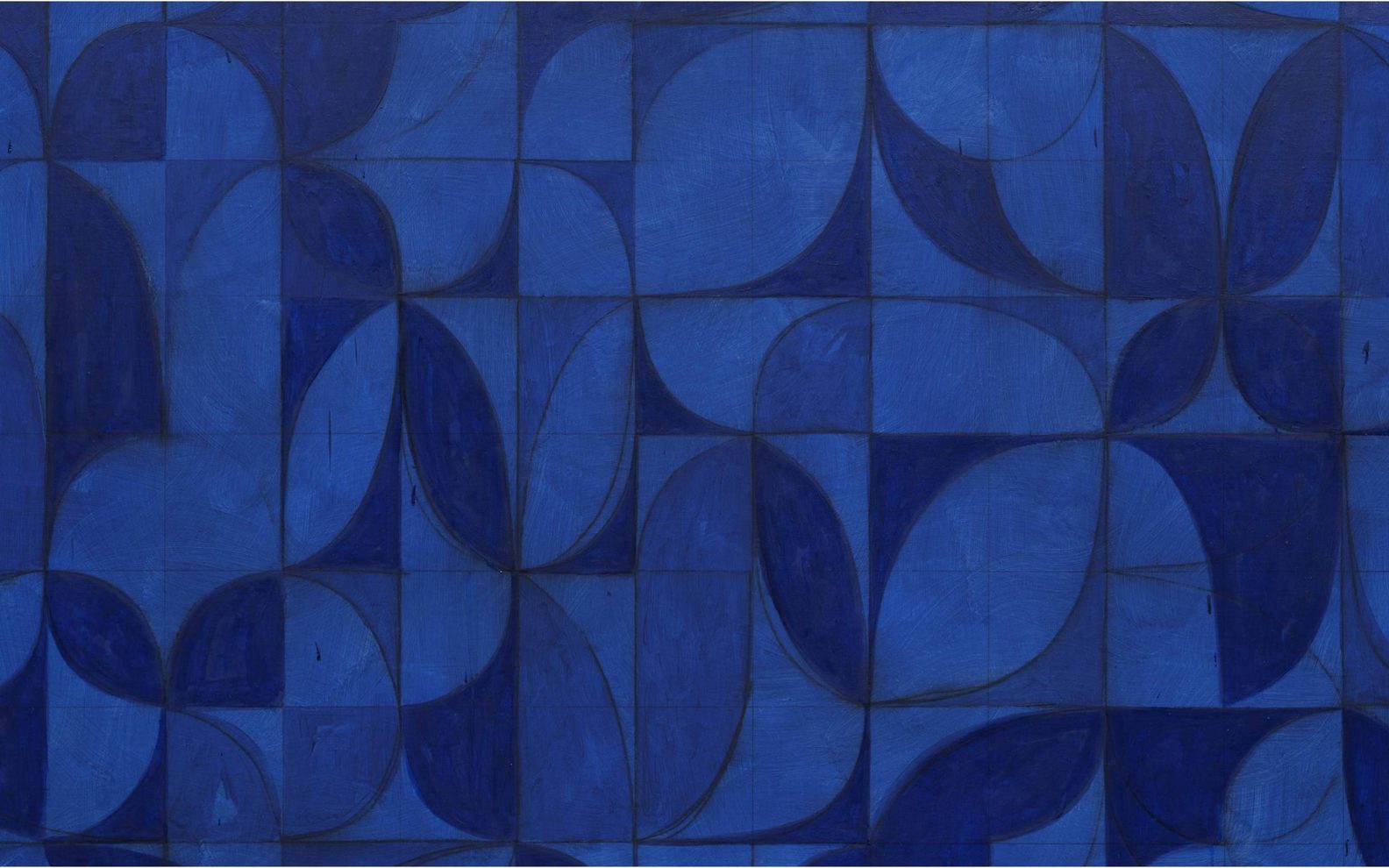
Kamrooz Aram: Lapis Intervention
Installation
July 14, 2026–July 11, 2027
Museum Collections Gallery
Purchasing Museum admission grants full access to all exhibitions on the selected day.
Header image credit:
Kamrooz Aram (b. 1978, Shiraz, Iran)
Untitled (Arabesque Composition in Lapis Lazuli), 2021
Lapis lazuli oil paint and pencil on linen
Pejman Family Collection
In this co-curated gallery intervention, artist Kamrooz Aram challenges the Eurocentric values that have shaped art history and museum displays.
For his Arabesque series, Aram reimagines the scrolling vegetal designs, known in Arabic as islimi, that enhance many works of Islamic art. Generations of art historians dismissed such “arabesque” motifs as ornamental. In response, Aram reworks and expands the islimi design to create abstract fields of colour and form in his paintings. He often pairs these canvases with historical Islamic ceramics to spark reflection on how museums elevate modernist abstraction over ornament.
In a first for the artist, the Aga Khan Museum has invited Aram to co-curate one such intervention. He has selected a celebrated thirteenth-century ceramic from the Aga Khan Museum Collection to display alongside one of his Arabesque paintings, revealing a shared appreciation for material and design across cultures and periods and challenging conventional distinctions between fine art and ornament.

Iran, probably Kashan, late 13th–early 14th century
Fritware; opaque cobalt glaze with overglaze painted and gilded decoration
AKM799
“I hope to renegotiate the terms in which art history has been written — the Eurocentric hierarchy that places certain types of painting in the category of fine art while others are relegated to the ‘minor’ arts.” – Kamrooz Aram
Bios

Kamrooz Aram
Artist

Dr. Michael Chagnon
Aga Khan Museum Curator
Government Partners